













Athira vs

{post_date: F j, Y}
Top performance management tools at a glance
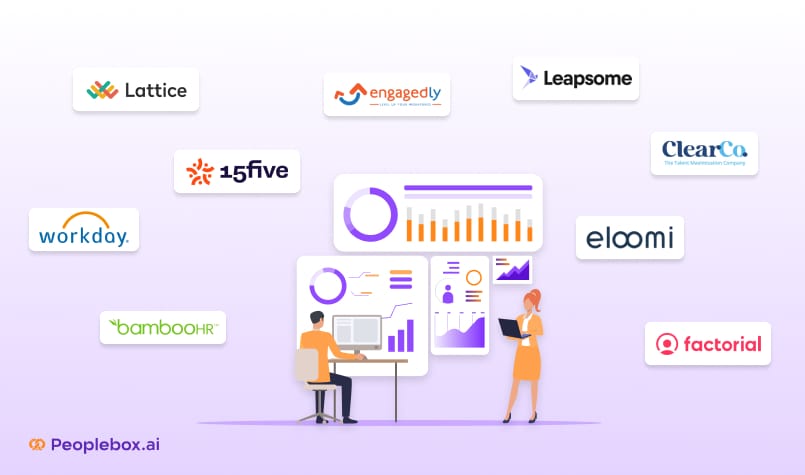
Here’s how the top performance management tools compare across G2 rating, pricing, company size, and the teams they work best for.
| Tool | G2 Rating | Pricing | Company Size | Best For |
|---|---|---|---|---|
| Lattice | 4.6/5 | $13/seat/month | Enterprise | HR and compensation teams connecting review cycles to merit raises and promotion planning. |
| Peoplebox | 4.5/5 | $8/seat/month | Enterprise | HR leaders that need AI-enabled review cycles to cut manual work for large teams. |
| 15Five | 4.6/5 | $16/seat/month | Mid-market | Managers in remote and hybrid teams running weekly check-ins, structured 1-on-1s, and pulse surveys. |
| Leapsome | 4.8/5 | Contact sales | Mid-market | Mid-market HR teams linking development and skill-building directly into performance review workflows. |
| Culture Amp | 4.5/5 | Contact sales | Enterprise | Enterprises that need performance reviews grounded in people science and organizational psychology. |
| PerformYard | 4.7/5 | $5/seat/month onwards | SMB | SMBs that need clean, flexible review cycles without the overhead of a full people platform. |
| Betterworks | 4.4/5 | $9/seat/month | Enterprise | Enterprises with complex hierarchies that need structured goal cascading across divisions. |
| Profit.co | 4.7/5 | Contact sales | SMB | Small teams that need OKR tracking with task management to track progress from goal to execution. |
What the data says about performance management that works
We analyzed 370,00+ goals, 3,500+ review cycles, and 110,00+ one-on-one meetings across 1,700+ companies. Here’s what separates high-performing review cycles from low-impact ones.
3x
more goals are completed by teams that run regular 1-on-1s compared to teams without a structured check-in process
What are performance management tools?
Performance management tools are software platforms that help organizations set goals, run reviews, collect feedback, and track employee progress throughout the year. They replace disconnected spreadsheets and manual processes with a single system that ties goal-setting, review cycles, and continuous feedback together.
Most modern platforms support OKRs, 360-degree feedback, 1-on-1s, and pulse surveys to keep managers and employees aligned on an ongoing basis. Unlike basic HRIS modules, dedicated performance management software offers deeper review workflows, goal alignment, and people analytics.
The seven functions performance management tools support
- Goal-setting and OKR alignment: Define individual, team, and company-level objectives and track progress in real time.
- Performance reviews and evaluations: Run structured review cycles (annual, quarterly, or continuous) with customizable templates and rating scales.
- Continuous feedback and check-ins: Enable ongoing manager-employee conversations through weekly check-ins, status updates, and real-time feedback.
- 360-degree feedback: Collect multi-directional input from peers, managers, and direct reports for a complete picture of employee performance.
- Employee engagement surveys: Measure sentiment, identify disengagement risks, and act on team-level trends between review cycles.
- Compensation management: Connect review outcomes to merit cycles, bonus allocation, and pay-band decisions within the same platform.
- Analytics and people insights: Surface performance trends, calibration data, 9-box grids, and manager effectiveness metrics to inform talent decisions.
Performance management tools by use case
| If this is your challenge | Choose tools that offer |
|---|---|
| Review completion and consistency | Customizable review forms + automated reminders + completion tracking |
| Goal visibility across the org | OKR cascading + real-time progress dashboards |
| Manager-employee alignment between cycles | Structured 1-on-1 templates + check-in history |
| Bias in performance evaluations | 360-degree feedback + multi-rater reports |
| Delayed action on disengagement | Pulse surveys + real-time sentiment alerts |
| Disconnected comp decisions | Compensation planning tied to review ratings |
| No single view of talent health | 9-box grids + performance trend analytics |
71%
of reviews are completed when forms have 11-15 questions, nearly double the 29.9% completion seen with 20+ questions
9x
higher goal completion is seen in companies using monthly review cycles compared to those running annual review cycles
Read the full reportSource: Peoplebox 2026 Performance Management Statistics Report
Best performance management tools and what makes each one different
Each performance management tool on this list solves a different problem. Some focus on review automation, others on goal alignment or manager coaching. Here’s what sets each platform apart so you can match the right tool to your team’s workflow.
Lattice — Best for HR and compensation teams connecting review cycles to merit raises and promotion planning
Lattice is a people management platform that ties performance reviews, goals, engagement, and compensation into one connected workflow. The platform is built around giving HR teams a clear line from review scores to pay decisions.
Key Features
- Customizable review cycles with multi-source feedback
- Compensation benchmarking tied to review scores
- Real-time goal tracking with progress dashboards
- Manager-led 1-on-1 agendas with action items
Cons
- Review workflows can feel rigid without multi-step HR approval
- 1-on-1 calendar sync tends to break, and group meetings aren’t supported
- Goal setup gets clunky when cascading across multiple org levels
- Reporting feels limited for teams that need custom analytics
Peoplebox — Best for HR leaders that need AI-enabled performance management to cut manual work in high-volume review cycles
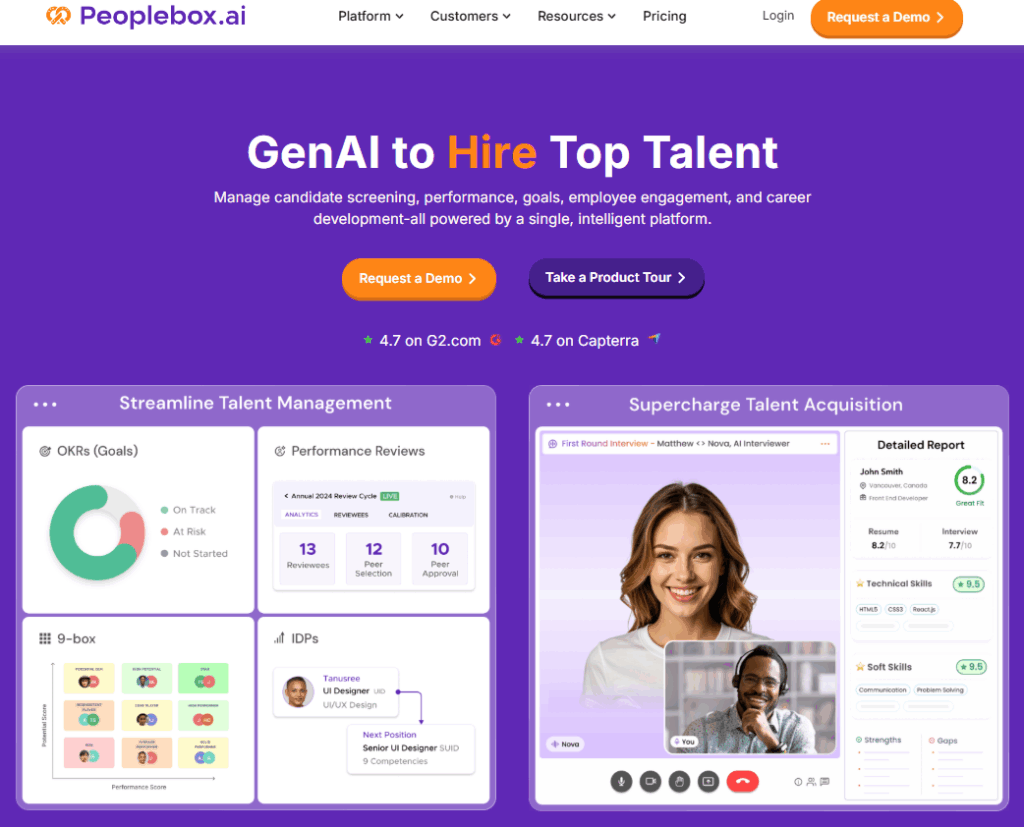
Peoplebox is an AI-powered continuous performance management software that connects goals, reviews, engagement, and compensation in one system. The platform is built to automate repetitive HR workflows and run performance cycles natively inside tools teams already use.
Key Features
- AI-assisted performance reviews with auto-generated drafts
- Automated goal check-ins with Jira, Asana, and 26+ tool integrations
- Run reviews and goal check-ins natively inside Slack and Teams
- Compensation planning tied to review outcomes
Limitations
- AI features are still evolving and improving with each update
- Limited flexibility in how progress metrics are displayed
- Notification emails to participants lack company branding
15Five — Best for managers in remote and hybrid teams running weekly check-ins, structured 1-on-1s, and pulse surveys
Ideal for: Mid-marketPricing: $16/seat/month ★ G2: 4.6/5
15Five is a performance management platform designed around the manager-employee relationship. The platform emphasizes weekly check-ins, continuous feedback, and coaching workflows over traditional annual review cycles.
Key Features
- Weekly check-ins with customizable question prompts
- AI-assisted performance reviews with bias reduction
- Engagement surveys with predictive analytics
- Manager coaching tools and microlearning modules
Limitations
- OKR tracking feels inflexible when managing multi-department objectives
- Reporting dashboards need heavy reformatting for executive-ready exports
- Check-in prompts start feeling repetitive after a few months of use
- Advanced customization options are locked behind higher-tier plans
Leapsome — Best for mid-market HR teams to link development and skill-building directly into performance review workflows
Ideal for: Mid-marketPricing: Contact sales ★ G2: 4.8/5
Leapsome is an HR platform built around connecting employee development with performance management. The platform combines reviews, goals, learning, engagement surveys, and compensation in one system with multilingual and GDPR-compliant infrastructure.
Key Features
- Competency frameworks with skill-level progression
- Learning paths tied to review outcomes
- Multilingual reviews and survey support
- Engagement surveys with action planning tools
Limitations
- Initial setup is complex with a steep learning curve for HR admins
- Navigation between sections feels unintuitive for regular users
- Notification system gets overwhelming when review cycles overlap
- No dedicated mobile app, relies on mobile browser
Culture Amp — Best for enterprises that need performance reviews grounded in people science and organizational psychology
Ideal for: EnterprisePricing: Contact sales ★ G2: 4.5/5
Culture Amp is a people and culture platform built on a foundation of organizational psychology and people science research. The platform combines performance reviews, goal tracking, and employee development with science-backed templates and question design.
Key Features
- Science-backed review templates designed by psychologists
- Calibration tools for fair and consistent ratings
- Skills Coach with nudges for manager development
- Heatmaps for spotting performance trends across teams
Limitations
- Performance reviews feel clunky compared to the engagement tools
- Navigation requires too many clicks to find specific information
- Goal and OKR module struggles to fit existing goal frameworks
- Custom reporting hits walls quickly for strategic analysis
- Survey question setup lacks flexibility for complex question types
PerformYard — Best for SMBs that need clean, flexible review cycles without the overhead of a full people platform
Ideal for: SMBPricing: $5/seat/month onwards ★ G2: 4.7/5
PerformYard is a performance management tool focused on reviews, goal tracking, and continuous feedback. The platform keeps things simple by not bundling in engagement, compensation, or learning modules.
Key Features
- Flexible review cycles with multiple review types
- Continuous feedback and recognition tools
- Goal tracking with alignment views
- Automated review reminders and workflows
Limitations
- Review template customization feels limited for complex workflows
- Reporting and analytics lack depth for tracking performance trends
- Dashboards could be more interactive for quick insights
- Bulk actions feel limited when managing reviews at scale
Betterworks — Best for enterprises with complex hierarchies that need structured goal cascading across divisions
Ideal for: EnterprisePricing: $9/seat/month ★ G2: 4.4/5
Betterworks is a performance management platform designed for large organizations managing goals, reviews, and feedback across layered reporting structures. The platform focuses on aligning OKRs and goals from company level down to individual contributors.
Key Features
- Goal cascading across departments and business units
- Configurable performance review cycles
- Continuous feedback and recognition workflows
- Manager-led 1-on-1 conversation templates
Limitations
- Interface feels unintuitive and takes time to navigate
- Goal and OKR setup is slow without templates or guided workflows
- Integrations with tools like Jira and Outlook feel incomplete
- Text formatting in reports is limited to plain text only
Profit.co — Best for small teams that need OKR tracking with task management to track goal progress
Ideal for: SMBPricing: Contact sales ★ G2: 4.7/5
Profit.co is an OKR-first platform that combines goal-setting, task management, and performance reviews in one tool. The platform is built around helping teams set, track, and measure OKRs with built-in task boards to manage execution.
Key Features
- OKR tracking with multiple check-in methods
- Task boards linked to key results
- 360-degree feedback and review cycles
- Free plan for up to 5 users
Limitations
- Navigation feels dense with too many clicks between modules
- Initial setup is overwhelming with so many features enabled
- Dashboard and homepage widgets lack useful design
- Standard reporting feels limited and exports need more flexibility
FAQs
How much do performance management tools cost?
Most performance management tools cost between $5 and $16 per seat per month, billed annually. PerformYard starts at $5, Peoplebox at $8, Betterworks at $9, Lattice at $13, and 15Five at $16. Culture Amp, Leapsome, and Profit.co use quote-based pricing. Free plans are rare, though Profit.co offers one for up to 5 users.
What features should I look for in a performance management tool?
Start with the basics: structured performance review programs, goal tracking, and continuous feedback. Beyond that, look for calibration tools, AI-assisted review writing, and integrations with Slack, Teams, or your HRIS. The right performance management solution depends on your process maturity. Teams running their first review cycle need simplicity over configurability.
What is the difference between performance management tools and an HRIS?
An HRIS handles employee records, payroll, and compliance. Performance management system software focuses on reviews, goals, feedback, and development. Some HRIS platforms include basic performance modules, but dedicated performance review tools offer deeper workflows, calibration, and analytics. If you need structured review cycles or OKR tracking, a standalone performance management solution fits better.
Can performance management tools work for remote and hybrid teams?
Yes. Continuous performance management software is designed for ongoing feedback regardless of location. 15Five supports async check-ins and remote coaching workflows. Peoplebox runs reviews and goal updates natively inside Slack and Teams. Look for automated reminders, async feedback options, and integrations with the collaboration tools your distributed team already uses.
How long does it take to implement a performance management tool?
It depends on team size and workflow complexity. Lightweight performance review platforms like PerformYard can go live in 1 to 2 weeks. Tools like Peoplebox or Leapsome take 2 to 4 weeks. Enterprise performance management tools for enterprises like Culture Amp or Betterworks typically need 4 to 8 weeks including SSO and HRIS integration.
Do I need separate tools for OKRs and performance reviews?
Not always. Several top performance management software platforms combine both. Peoplebox, Lattice, Betterworks, and Profit.co include OKR or goal tracking alongside performance review software. The question is depth: Profit.co is OKR-first, while Lattice and Culture Amp treat goals as a supporting feature. Choose based on how formally your organization runs OKR cycles.
How do I get managers to actually complete performance reviews?
Low adoption is the top reason performance review programs fail. Choose an employee performance review software that fits into existing workflows. Slack and Teams integrations reduce friction. AI-generated review drafts cut writing time. Short weekly check-in formats keep managers engaged between cycles. Avoid platforms that require learning a complex new interface.
TABLE OF CONTENTS
RELEVANT ARTICLES
Our Customers Love us