Choosing the right performance management system is like searching for your soulmate on a dating app. When you find “the one,” it’s magic. But getting there can be tricky.
What makes a system “right”? A good performance management system does more than track how people are doing. It helps everyone reach their full potential by turning feedback into real improvement.
When teams stay aligned, engaged, and growing because of the system, your workplace becomes a hub for innovation. Success builds on itself naturally.
This is why today’s performance systems have moved beyond old yearly reviews. Modern systems work as smart talent management centers. They track progress in real-time, give actionable insights, and integrate smoothly with other HR tools.
According to research by Gallup, only 14% of employees strongly agree their performance reviews inspire them to improve. This highlights the urgent need for better systems. Meanwhile, companies using structured performance management software see up to 44% better retention rates for top talent.
Ready to make excellence a regular thing in your workplace? It’s time to commit to better performance and stick with it.
What is a Performance Management System (PMS)?
A Performance Management System (PMS) is a structured framework that organizations use to set clear goals and provide regular feedback. It tracks employee progress while supporting continuous development.
Unlike traditional annual reviews, a modern PMS is an ongoing process. It helps both employees and organizations thrive together.The system combines goal setting, performance monitoring, constructive feedback, and development opportunities. This creates a comprehensive approach to managing talent.
At its core, a PMS transforms performance tracking from a once-a-year checkbox exercise. It becomes a dynamic, continuous conversation that drives real results.
Everyone knows what’s expected. They understand how they’re progressing. And they have the support they need to succeed.
Key elements of a PMS include:
- Goal Setting: Establishing clear, measurable objectives aligned with business priorities using frameworks like OKR software
- Continuous Feedback: Regular check-ins and constructive conversations between managers and employees through one-on-one meetings
- Performance Tracking: Monitoring progress toward goals in real-time
- Development Planning: Identifying skill gaps and creating personalized growth paths
- Recognition: Acknowledging achievements and reinforcing positive performance
When implemented effectively, a performance management system becomes more than just a tool. It becomes the foundation for building a high-performing, engaged workforce.
Why is a performance management system important?
A performance management system plays a crucial role in building a high-performing, engaged, and goal-driven workforce. It’s not just about tracking metrics. It’s about creating clarity, fostering growth, and aligning everyone toward shared success.
Here’s why a PMS is essential:
1. Boosts Productivity and Focus
When employees have clear goals and regular feedback, they know exactly what’s expected. They can focus their energy on what matters most. A PMS eliminates ambiguity, helping teams work more efficiently and deliver better results.
2. Aligns Individual Work with Business Strategy
A strong PMS connects the dots between daily tasks and company vision. It ensures that every employee understands how their contributions drive organizational success. This creates alignment from the top down and fosters a sense of purpose.
3. Improves Employee Engagement and Retention
Employees who receive regular feedback, recognition, and development opportunities are more likely to stay engaged. Companies using a structured performance management system are 39% more likely to retain top talent, improving both satisfaction and retention rates. Tools like employee pulse surveys help organizations continuously measure and improve engagement levels.
4. Enables Data-Driven Decision Making
With real-time insights and performance analytics, leaders can identify top performers and spot trends. They can address challenges before they escalate. A PMS provides the data needed to make informed decisions about promotions, compensation, and workforce planning.
5. Supports Continuous Development
Instead of waiting for an annual review, a PMS creates ongoing opportunities for learning. It helps employees develop new skills, prepare for future roles, and stay competitive in a rapidly changing workplace.
6. Fosters a Culture of Accountability and Transparency
When performance expectations are clear and progress is tracked consistently, it creates accountability at all levels. Employees know what success looks like. Managers can provide fair, objective evaluations based on measurable outcomes.
By integrating these benefits, a performance management system doesn’t just improve workplace efficiency. It creates a culture where employees feel valued, motivated, and aligned with the company’s long-term success.
Related Resource: Best Performance Management Tools
| CTA BANNER
Ready to transform how your organization manages performance?
See how Peoplebox.ai can help you align goals, boost engagement, and drive measurable results with our all-in-one performance management platform.
Schedule a Demo |
What should you look for in a performance management system?
Choosing the right performance management system is about finding a solution that fits your organization’s culture. It should support your goals and make performance tracking genuinely useful, not just another administrative burden.
Here’s what to prioritize:
1. Ease of Use and Adoption
The best PMS is one that employees and managers actually want to use. Look for an intuitive interface that doesn’t require extensive training. If the system is clunky or complicated, adoption rates will plummet, and your investment won’t deliver results.
2. Real-Time Feedback and Continuous Check-Ins
Annual reviews are outdated. Your PMS should support ongoing conversations through regular check-ins, real-time feedback, and continuous performance tracking. This keeps employees engaged and allows managers to address issues before they become problems.
3. Goal Setting and Alignment Capabilities
Strong goal-setting features are essential. Look for systems that support OKRs (Objectives and Key Results), SMART goals, or other frameworks that connect individual objectives to company strategy. Clear alignment ensures everyone is working toward the same vision.
4. Customization and Flexibility
Every organization is different. Your PMS should be flexible enough to adapt to your specific workflows, performance cycles, and evaluation criteria. Whether you need competency frameworks, skill assessments, or custom review templates, the system should bend to your needs, not the other way around.
5. Integration with Existing Tools
A PMS should work seamlessly with your current HR tech stack. This includes HRIS, payroll, communication platforms like Slack or Microsoft Teams, and project management tools. Smooth integration reduces data silos and streamlines workflows.
6. Analytics and Reporting
Data-driven insights are what transform a PMS from a tracking tool into a strategic asset. Look for robust reporting capabilities that help you identify trends, measure engagement, track goal completion rates, and make informed decisions about talent development.
7. Employee Development Features
A great PMS doesn’t just evaluate performance. It supports growth. Look for features like career pathing, skills assessments, learning recommendations, and development plans that help employees reach their full potential.
8. Recognition and Rewards Integration
Recognition should be built into the performance management process. Systems that allow managers and peers to acknowledge achievements in real-time help reinforce positive behavior and boost morale.
9. Scalability
Your PMS should grow with your organization. Whether you’re a 50-person startup or a 5,000-employee enterprise, the system should handle increased users, more complex workflows, and evolving performance management needs.
10. Strong Support and Training Resources
Even the best system requires proper implementation and ongoing support. Look for vendors that offer comprehensive training, responsive customer support, and resources like tutorials, webinars, and user communities.
By focusing on these key factors, you’ll find a performance management system that not only tracks performance but actively drives employee engagement, development, and business success.
Key Components of a Performance Management System (PMS)
A well-structured performance management system relies on several interconnected components that work together to drive employee growth, accountability, and business success. Each element plays a critical role in ensuring performance management is effective, continuous, and aligned with organizational goals.
1. Planning & Goal Setting
This is where performance management begins. Clear, measurable objectives give employees direction and help them understand how their work contributes to broader business goals.
Key benefits:
- Provides focus and improves employee motivation
- Creates a foundation for measuring success effectively
- Ensures alignment across the organization
Whether using OKRs, SMART goals, or another framework, effective goal setting is the starting point for performance excellence.
2. Performance Monitoring
Continuous tracking is essential for staying on course. Performance monitoring provides real-time insights into employee progress, identifies potential roadblocks, and allows managers to offer timely support.
What it enables:
- Real-time visibility into team productivity
- Early identification of challenges and roadblocks
- Course correction without waiting for annual reviews
- Maintained alignment with company objectives
3. Employee Development
Growth is at the heart of effective performance management. This component identifies skill gaps and provides targeted training, mentorship, and learning opportunities.
Development focus areas:
- Targeted training based on identified skill gaps
- Mentorship and coaching opportunities
- Personalized learning paths for career growth
- Preparation for future roles and responsibilities
A strong focus on development fosters a culture of continuous learning that benefits both individuals and the organization.
4. Performance Review & Rating
Regular, structured check-ins replace outdated annual reviews with meaningful conversations. This component assesses progress, addresses challenges, and provides constructive feedback.
Review best practices:
- Conduct regular check-ins instead of annual-only reviews
- Focus on growth opportunities, not just ratings
- Address challenges with actionable solutions
- Keep employees engaged and motivated
When done well, performance reviews become opportunities for growth rather than just evaluations.
5. Feedback & Communication
Open, honest communication is the glue that holds everything together. Regular feedback ensures employees know where they stand, what they’re doing well, and where they can improve.
Communication essentials:
- Both formal and informal feedback channels
- Two-way conversations that give employees a voice
- Clear, constructive input on performance
- Transparency that builds trust
One-on-one meetings create a culture of transparency and trust between managers and employees.
6. Rewards & Recognition
Acknowledging achievements isn’t just nice to have. It’s essential for motivation and retention.
Recognition impact:
- Reinforces positive performance and desired behaviors
- Boosts team morale and job satisfaction
- Fosters a culture of appreciation
- Directly impacts engagement and retention rates
Celebrating wins, whether big or small, makes employees feel valued and drives continued success.
By integrating these essential components, a performance management system creates a structured yet supportive environment where employees can thrive, stay motivated, and contribute meaningfully to organizational success.
What are the types of performance management system?
Performance management systems come in various forms, each designed to meet different organizational needs and approaches to evaluating employee performance. Understanding these types helps you choose the best fit for your company’s culture, goals, and workforce dynamics.
1. Traditional Performance Reviews
The classic annual or semi-annual review process, where managers evaluate employee performance against set objectives.
Key features:
- Formal documentation and performance ratings
- Goal setting for the next period
- Structured and comprehensive approach
Limitations: Can feel disconnected from day-to-day work and may not provide timely feedback.
Best for: Organizations with stable, predictable work environments where annual assessments align with compensation cycles.
2. Continuous Performance Management
A modern approach focused on ongoing feedback, regular check-ins, and real-time performance tracking.
Key features:
- Frequent conversations about progress and challenges
- Real-time performance tracking
- Ongoing development discussions
Benefits: Creates a culture of continuous improvement and keeps everyone aligned.
Best for: Fast-paced organizations, tech companies, and businesses that value agility and rapid adaptation.
3. 360-Degree Feedback Systems
A comprehensive evaluation method that gathers input from multiple sources: managers, peers, direct reports, and sometimes even clients or external stakeholders.
Key features:
- Multi-source feedback collection
- Well-rounded view of employee performance
- Captures different perspectives on strengths and weaknesses
360-degree employee reviews provide holistic insights that single-source feedback cannot.
Best for: Organizations focused on leadership development, team collaboration, and creating a culture of transparency.
4. Management by Objectives (MBO)
A goal-oriented approach where employees and managers jointly set specific, measurable objectives at the start of a period.
Key features:
- Collaborative goal setting
- Performance evaluation based on objective achievement
- Strong alignment between individual and organizational goals
Focus: Clear, measurable outcomes that drive organizational success.
Best for: Results-driven organizations where clear, measurable outcomes are critical to success.
5. OKR-Based Performance Management
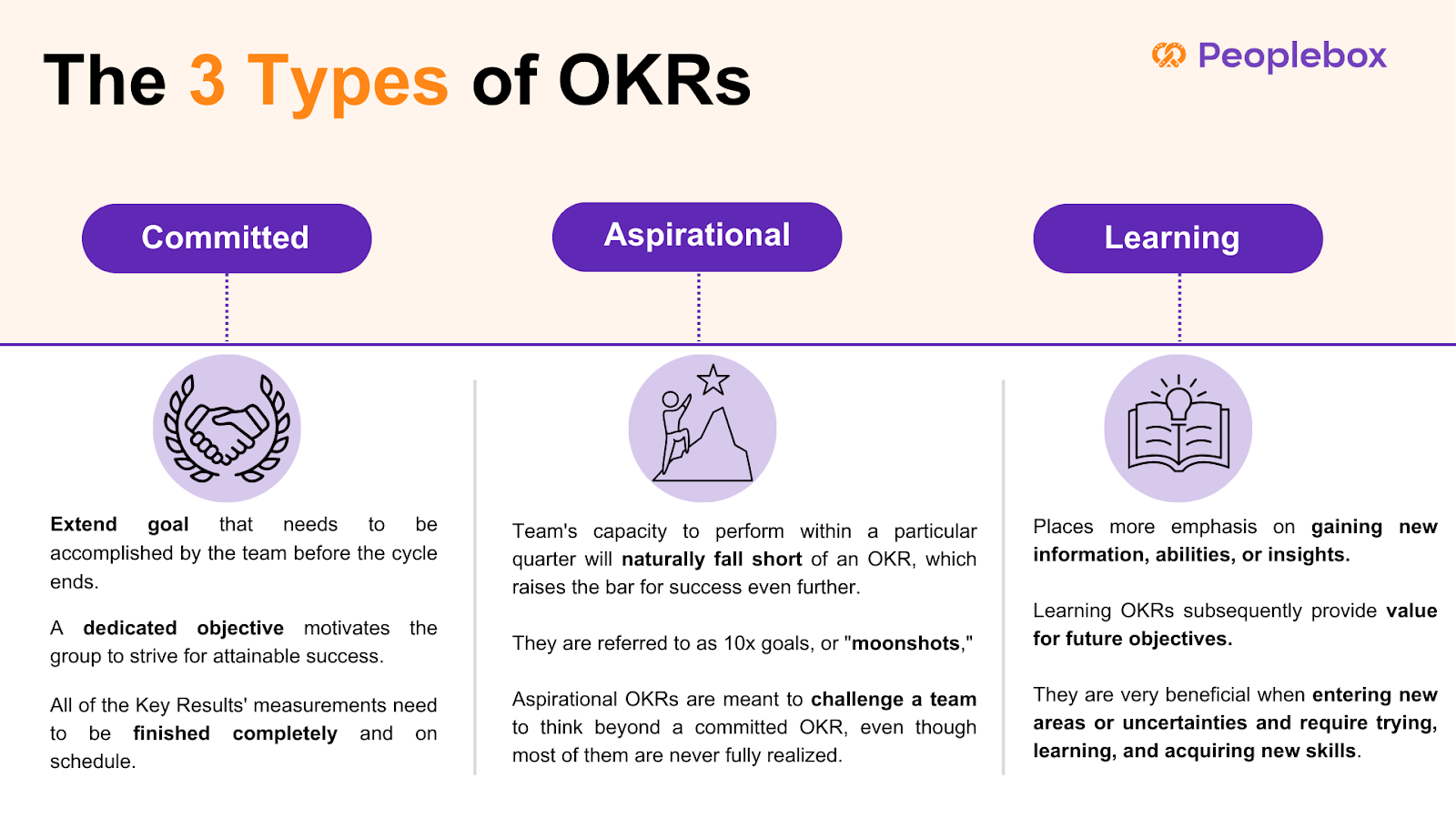
Uses Objectives and Key Results (OKRs) to set ambitious goals and track measurable outcomes.
Key features:
- Clear objectives (what you want to achieve)
- Measurable key results (how you’ll measure success)
- Transparency and alignment across teams
- Stretch goals that drive innovation
Benefits: Promotes ambitious thinking and keeps everyone focused on high-impact priorities.
Best for: High-growth companies, startups, and organizations embracing ambitious, outcome-focused cultures.
6. Employee Development-Focused Platforms
Performance systems that prioritize learning, skill development, and career growth over traditional ratings.
Key features:
- Competency gap identification
- Personalized training recommendations
- Mentorship opportunities
- Career development planning
Focus: Potential and growth rather than just past performance.
Best for: Organizations committed to long-term talent development and internal mobility.
7. Competency-Based Performance Management
Evaluates employees based on specific skills, behaviors, and competencies required for their roles.
Key features:
- Assessment of how work is done, not just outcomes
- Focus on core capabilities (leadership, communication, problem-solving)
- Technical and behavioral skill evaluation
- Role-specific competency frameworks
Best for: Professional services firms, healthcare organizations, and companies where specific competencies drive success.
By understanding the different types of performance management systems, organizations can select the approach that best fits their culture, goals, and workforce needs, ensuring long-term success and employee growth.
Related Resource: Best Performance Management Software
| Customer Testimonial
Since we started using Peoplebox.ai, we have been able to bring all of our leadership across the organization together and show them how all of our goals align.Â
Jaclyn Hoover
Senior Director HR, Propel School |
The Real Impact: How a Performance Management System Delivers ROI
A performance management system (PMS) is more than just a tool. It’s a strategic investment that drives productivity, enhances employee engagement, and delivers measurable financial returns. When implemented effectively, a PMS impacts your bottom line in tangible ways.
How a PMS Delivers ROI:
1. Increased Productivity
Clear goals and real-time feedback keep employees focused and motivated. Performance tracking ensures alignment with business objectives, eliminating wasted effort and driving results. When everyone knows what success looks like, productivity naturally improves.
2. Lower Employee Turnover
Engaged employees are more likely to stay, reducing costly hiring and training expenses. A culture of recognition, development, and regular feedback makes employees feel valued, directly improving retention rates. Companies with strong performance management systems retain top talent more effectively.
3. Smarter Decision-Making
Data-driven insights help managers identify top performers, spot skill gaps, and address challenges proactively. Better performance analytics lead to informed workforce planning, smarter promotion decisions, and more effective resource allocation.
4. Higher Employee Engagement
Regular feedback and development opportunities boost morale and job satisfaction. When employees feel supported and see a clear path for growth, they’re more invested in their roles and committed to organizational success.
5. Cost Savings & Efficiency
Automation reduces administrative workload, minimizes human errors, and frees up HR teams to focus on strategic initiatives. Optimized performance management leads to better resource allocation and operational efficiency.
6. Improved Performance Quality
When employees receive consistent feedback and have access to development resources, the quality of their work improves. A PMS helps raise performance standards across the organization, leading to better outcomes for customers and stakeholders.
At its core, a strong PMS doesn’t just track performance. It drives success, making it one of the most valuable investments for any organization.
Related Resource: Performance Management Best Practices
A Real Example of ROI from a Performance Management System
Investing in a performance management system isn’t just about improving employee performance. It’s about achieving measurable business results. To understand the real impact, let’s calculate the return on investment of implementing a PMS.
| ROI Formula:
ROI (%) = [(Gain from Investment – Cost of Investment) / Cost of Investment] Ã 100 |
Key Metrics for PMS ROI
1. Increased Productivity
Impact: A PMS helps employees focus on goals and provides real-time feedback, boosting productivity.
Industry Data: Studies show productivity improvements can range from 5% to 20% after implementing effective feedback mechanisms.
Example Calculation:
- Assume each employee generates $100,000 annually in revenue
- A 10% productivity increase across 500 employees results in $5,000,000 additional revenue annually
2. Reduced Employee Turnover
Impact: Engaged employees are less likely to leave, reducing hiring and training costs.
Industry Data: Gallup found that strengths-based feedback reduces turnover by 14.9%, while other benchmarks suggest PMS can cut turnover by 7%-25%.
Example Calculation:
- If turnover is 20% (100 employees leaving annually) and hiring costs are $10,000 per employee
- Reducing turnover by 25% saves $250,000 per year
3. Enhanced Employee Engagement
Impact: Regular feedback improves morale and job satisfaction.
Industry Data: Disengaged employees cost organizations up to 34% of their salary in lost productivity.
Example Calculation:
- For 300 employees with an average salary of $60,000 and a disengagement rate of 17.2%, the cost of disengagement is $1,052,640 annually
- Reducing disengagement by 7% saves $428,400 annually
4. Cost Savings Through Automation
Impact: Automating PMS processes reduces administrative workload and human errors.
Industry Data: Automation saves time and improves efficiency, freeing up resources for strategic initiatives.
Sources Used:
- PeopleHum article on measuring PMS ROI
- PerformYard ROI calculator for PMS metrics
- BetterUp blog on KPIs for retention and engagement improvements
- PageUp insights on turnover reduction through PMS
This analysis demonstrates how PMS implementation can yield significant financial benefits while addressing productivity gaps and employee retention challenges.
Real Life Examples of a Performance Management System (PMS)
Understanding how performance management systems work in practice helps illustrate their real-world impact. Here are examples of how different organizations implement PMS to drive results:
1. Google – OKR-Based Performance Management
Google uses Objectives and Key Results (OKRs) as the foundation of its performance management system. Employees set ambitious quarterly goals aligned with company objectives, and progress is tracked transparently across teams. This system fosters alignment, encourages innovation, and creates accountability while allowing flexibility in how goals are achieved.
Key Takeaway: OKRs work exceptionally well for organizations focused on innovation, rapid growth, and ambitious goal-setting.
2. Adobe – Check-In Continuous Feedback System
Adobe replaced traditional annual reviews with a system called “Check-In,” which emphasizes continuous feedback and regular conversations between managers and employees. This approach focuses on ongoing development, real-time coaching, and goal adjustments rather than backward-looking ratings.
Impact: Adobe reported increased employee engagement and reduced voluntary turnover after implementing this continuous performance management approach.
Key Takeaway: Continuous feedback systems create more meaningful employee-manager relationships and drive better performance outcomes than annual reviews alone.
3. Deloitte – Performance Snapshot Approach
Deloitte redesigned its performance management system to focus on future performance rather than past evaluations. Their “Performance Snapshot” asks team leaders simple questions about what they would do with each team member (promote, retain, compensate) rather than rating past behaviors. This forward-looking approach reduces bias and makes evaluations more actionable.
Key Takeaway: Simplifying performance evaluations and focusing on future potential can make the process more effective and less time-consuming.
4. GE – Continuous Performance Development (PD@GE)
General Electric moved away from its famous forced-ranking system to implement PD@GE (Performance Development at GE), which emphasizes ongoing touchpoints, real-time feedback, and employee-driven goal setting. The system uses a mobile app to facilitate frequent check-ins and feedback exchanges.
Key Takeaway: Even traditional organizations can successfully transition to modern, continuous performance management systems with the right tools and cultural shift.
5. Microsoft – Growth Mindset Performance Culture
Microsoft shifted from a stack-ranking system that pitted employees against each other to a growth mindset approach that emphasizes learning, collaboration, and development. Their PMS now focuses on how employees can grow, contribute to team success, and align with company values.
Impact: This cultural shift improved collaboration, innovation, and employee satisfaction across the organization.
Key Takeaway: Performance management systems should support the behaviors and culture you want to create, not undermine them.
6. Netflix – Context Over Control
Netflix takes a unique approach by emphasizing “context, not control.” Their performance management philosophy relies on clear communication of goals and context, giving employees freedom to make decisions. Performance is evaluated based on outcomes and contribution to company success rather than rigid processes.
Key Takeaway: For high-performing, autonomous teams, minimal structure combined with clear expectations can be highly effective.
These real-life examples demonstrate that there’s no one-size-fits-all approach to performance management. The best system is one that aligns with your organization’s culture, goals, and the way your teams naturally work.
Related Resource: OKR Examples
The Future of Performance Management: AI & Emerging Trends
1. How AI is Changing Performance Reviews
- Bias Reduction: AI tools can analyze review language to flag unconscious bias, ensuring fairer evaluations.
- Manager Assistance: AI can summarize a yearâs worth of feedback, notes, and milestones into a draft review, saving managers hours of manual work.
- Personalized Coaching: AI can suggest specific training modules or “nudges” based on an employeeâs unique performance gaps.
2. The Shift to Continuous Feedback
- Move away from the “once-a-year” dread. Modern systems facilitate real-time “micro-feedback” that happens in the flow of work (e.g., via Slack or Microsoft Teams), making performance conversations a daily habit rather than an annual event.
3. Data-Driven People Analytics
- Organizations are shifting from “gut feeling” to data. Modern PMS platforms now offer predictive analytics that can identify “flight risks” (employees likely to leave) or high-potential talent long before human managers notice the patterns.
How to implement a performance management system smoothly?
Implementing a performance management system requires a well-planned strategy to ensure adoption, engagement, and long-term success. Follow these steps to integrate the tool seamlessly into your organization:
Step 1: Set Clear Objectives
Define realistic, measurable goals that align with business priorities and employee expectations. Clear objectives ensure everyone understands their role in achieving success and prevent confusion or misalignment. Goals should be challenging yet attainable, providing direction and motivation.
Step 2: Select the Right Software
Choose a platform that integrates seamlessly with your existing tools and workflows while being user-friendly and adaptable. Consider factors like ease of use, customization options, reporting capabilities, and scalability to ensure the software grows with your organization and meets long-term needs.
Step 3: Get Leadership Buy-In
Ensure executives and senior leaders understand the value of the PMS and are committed to supporting it. When leadership actively participates and champions the system, it sends a powerful message that drives organization-wide adoption.
Step 4: Identify Internal Champions
Find influential employees across different teams who can advocate for the new system. These champions help answer questions, encourage adoption, and provide peer-to-peer support, making the transition smoother and more widely accepted.
Step 5: Communicate Clearly and Consistently
Inform employees about why the new tool is being introduced and how it will benefit them. Transparent communication prevents resistance to change and ensures buy-in from both employees and leadership. Address concerns proactively, answer questions, and provide a clear roadmap for implementation.
Step 6: Customize for Different Departments
Different teams will benefit from the PMS in different ways, so tailor your messaging and configuration accordingly. Finance teams will appreciate ROI tracking and performance metrics. Creative teams will value recognition and portfolio-building features. IT teams need assurance about security, integration, and system reliability.
Step 7: Provide Comprehensive Training
Conduct hands-on training sessions to familiarize employees and managers with the tool’s features and functionalities. Provide resources like tutorials, user guides, FAQs, and support channels to ensure a smooth transition. The more comfortable people are with the system, the more likely they are to use it effectively.
Step 8: Start Small, Scale Gradually
Rather than overwhelming employees with a full-scale rollout, begin with small, manageable milestones. Focus on quick wins such as goal setting or feedback loops so teams experience the benefits early. As confidence grows, expand functionality step by step, making the transition feel natural.
Step 9: Monitor Progress and Gather Feedback
Regularly review how the system is being used, gather feedback from users, and track its impact on performance management processes. Identify any issues early and be open to making adjustments if necessary. Continuous monitoring ensures the tool remains effective and relevant.
Step 10: Celebrate Success and Early Wins
Recognize employees who actively engage with the system and achieve performance milestones. Celebrating progress fosters motivation, encourages widespread adoption, and reinforces a culture of appreciation and growth. Public recognition and small rewards can go a long way in making employees feel valued.
Successful implementation is not just about launching a tool. It’s about making it a valuable part of your organization’s culture. With the right approach, your performance management system becomes an asset that drives productivity, engagement, and continuous improvement.
Related Resource: Performance Management Process
Common Challenges in Performance Management System (And How to Overcome Them)
Implementing a performance management system can significantly improve efficiency, goal alignment, and employee engagement, but it’s not without challenges. Organizations must proactively address common hurdles to ensure smooth adoption and long-term success.
1. Resistance to Change
The Challenge: Introducing new software often meets resistance, especially if employees are comfortable with existing processes. Change can feel threatening, and people naturally resist what disrupts their routine.
How to Overcome It:
- Communicate benefits early and clearly. Explain what’s in it for employees, not just the organization
- Involve employees in the selection and implementation process so they feel ownership
- Identify and empower internal champions who can advocate for the system peer-to-peer
- Start with pilot groups to build success stories that encourage wider adoption
2. Lack of Manager Training
The Challenge: Managers often approach new performance tools with hesitation or lack the skills to use them effectively. Without proper training, even the best system won’t deliver results, and managers may fall back on old habits.
How to Overcome It:
- Provide comprehensive, role-specific training that goes beyond basic navigation
- Offer ongoing support through office hours, help resources, and peer mentoring
- Create simple job aids and checklists that make using the system easier
- Train managers on giving effective feedback, not just how to use the software
3. Poor Goal Alignment
The Challenge: Keeping individual goals aligned with company objectives is difficult. When goals aren’t connected to broader strategy, employees may work hard on things that don’t matter, creating wasted effort and frustration.
How to Overcome It:
- Establish a clear goal-setting framework (like OKRs or SMART goals) that cascades from company objectives
- Schedule regular check-ins to review and adjust goals as priorities shift
- Use the PMS to visualize how individual goals connect to team and organizational objectives
- Encourage managers to discuss the “why” behind goals, not just the “what”
4. Inconsistent Usage Across Teams
The Challenge: Some departments embrace the PMS while others ignore it, creating fragmented adoption and inconsistent data. This undermines the system’s value and makes company-wide insights impossible.
How to Overcome It:
- Make PMS usage part of manager performance expectations
- Share success stories from teams that are using the system effectively
- Provide department-specific training that addresses unique workflows
- Regularly review usage data and address low-adoption areas proactively
5. Data Overload Without Insights
The Challenge: Performance systems can generate massive amounts of data, but without proper analysis and reporting, it’s just noise. Managers and HR teams struggle to turn raw data into actionable insights.
How to Overcome It:
- Configure dashboards to show the metrics that actually matter to decision-makers
- Train leaders on how to interpret and act on performance data
- Schedule regular data review sessions to identify trends and areas for improvement
- Focus on a few key metrics rather than trying to track everything
6. Lack of Integration with Other Systems
The Challenge: When the PMS doesn’t integrate with HRIS, payroll, learning platforms, or communication tools, it creates duplicate work and data silos that frustrate users.
How to Overcome It:
- Prioritize integration capabilities when selecting a PMS
- Work with IT to ensure seamless data flow between systems
- Automate data syncing wherever possible to reduce manual entry
- Choose platforms with robust APIs and pre-built integrations
7. Treating the PMS as a “Set It and Forget It” Solution
The Challenge: Organizations implement the system but don’t actively maintain it, update it, or evolve it as needs change. The PMS becomes stale and loses relevance over time.
How to Overcome It:
- Assign ownership to an HR leader or team responsible for the system’s ongoing success
- Schedule quarterly reviews to assess what’s working and what needs improvement
- Continuously gather user feedback and make iterative improvements
- Stay current with new features and best practices from your PMS vendor
By addressing these challenges head-on with practical solutions, businesses can maximize the impact of their performance management system, ensuring it becomes an essential tool for productivity, engagement, and long-term growth.
Related Resource: Performance Appraisal Methods
The Bottom Line
A Performance Management System (PMS) isn’t just another tool in your HR tech stack. It’s the foundation for building a culture of continuous improvement, accountability, and growth. When implemented thoughtfully and aligned with your organization’s unique needs, it transforms performance from an annual formality into an ongoing, meaningful process.
The best PMS isn’t about having the most features. It’s about choosing a system that truly helps your team grow and succeed. It should integrate smoothly into daily workflows, making performance tracking, feedback, and goal alignment effortless rather than burdensome.
A well-chosen and properly implemented PMS:
- Fosters transparency and trust between employees and managers
- Creates accountability at all levels of the organization
- Supports continuous development and career growth
- Enhances productivity by keeping everyone focused on what matters
- Strengthens engagement by making employees feel supported and valued
When you invest in the right performance management system and commit to using it effectively, you’re not just tracking performance. You’re actively building a workplace where people thrive, contribute meaningfully, and achieve their full potential.
FAQ
What are the 3 types of Performance Management Systems?
- Traditional Performance Management – Focuses on annual performance reviews, goal setting, and periodic evaluations to assess employee performance.
- Continuous Performance Management – Involves ongoing feedback, regular check-ins, and real-time performance tracking to ensure continuous improvement.
- 360-Degree Feedback System – Collects feedback from multiple sources, including peers, managers, subordinates, and sometimes clients, for a well-rounded performance evaluation.
What are the 5 elements of a Performance Management System?
- Planning & Goal Setting – Defining clear, measurable objectives aligned with organizational goals
- Performance Monitoring – Tracking progress and identifying areas for improvement in real-time
- Employee Development – Providing training, mentorship, and learning opportunities for growth
- Performance Review & Rating – Conducting regular evaluations and providing constructive feedback
- Rewards & Recognition – Acknowledging achievements and reinforcing positive performance
How does AI improve the performance management process?
AI improves the process by automating administrative tasks (like drafting reviews), identifying performance patterns through data, and providing real-time suggestions to managers to help them coach their teams more effectively.
What is the difference between a PMS and an HRIS?
While an HRIS (Human Resources Information System) manages employee data, payroll, and benefits, a PMS (Performance Management System) focuses specifically on goal setting, continuous feedback, and employee development to drive performance.
How much does a performance management system cost?
Performance management systems typically cost $5-$50 per employee per month, depending on company size and features. Peoplebox offers flexible, transparent pricing with comprehensive features, including OKRs, performance reviews, 360-degree feedback, and executive dashboards, all in one platform without hidden costs or expensive add-ons.
What are the best performance management solutions for a company with a 20-100 headcount?
For growing companies with 20-100 employees, Peoplebox is purpose-built for this stage, offering easy implementation, scalable features including OKR management, continuous feedback, performance reviews, and 360-degree feedback all with seamless Slack and Microsoft Teams integration at startup-friendly pricing.
Which performance management systems offer executive dashboards?
Peoplebox offers industry-leading executive dashboards with real-time analytics for goal tracking, performance metrics, engagement scores, and turnover risk indicators. The platform provides customizable views, drill-down capabilities, skills gap analysis, and automated reporting, giving leadership teams unified insights from performance reviews, OKRs, pulse surveys, and one-on-ones without requiring expensive add-ons.